Casino War Tie Bet Odds: The Mathematical Trap
The tie bet in Casino War is a sucker's wager, and anyone telling you otherwise is either ignorant of the math or actively trying to fleece you. The house edge on this side bet sits at a brutal 18.65 percent, a figure that should make any rational player recoil instantly. You are not betting on a balanced coin flip here; you are betting against a payout structure deliberately engineered to bleed your bankroll dry. The true odds of a tie occurring in a single-deck game hover around 7.7 percent, yet the payout is typically 10 to 1. That gap between real probability and offered return is where your money evaporates. 🎰
Let me break down the arithmetic without sugarcoating it. In a standard single-deck Casino War setup, there are 52 cards. The probability that your card and the dealer's card share the same rank works out to exactly 3 out of 51, or roughly 5.88 percent when you account for the first card removed revealing your rank. Wait, let me correct that figure because precision matters: the actual tie probability is 3/51, which simplifies to 1/17, or 5.88 percent. But the payout is 10:1. The expected value formula delivers a house edge of 18.65 percent. Compare that to the base game's house edge of approximately 2.88 percent. The tie bet is six times worse. Six times. That is not a rounding error; that is a financial hemorrhage.
Why Budget Live Tables Amplify the Risk
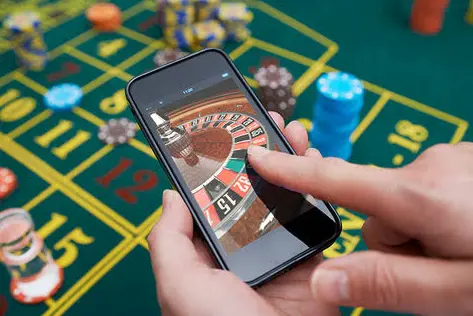
Budget Casino War live tables attract a specific breed of player, and the operators know it. Lower minimum bets create a psychological illusion of safety, convincing players that the tie bet is a cheap thrill worth chasing. It is not. The lower stakes simply mean you lose more slowly, not that you lose less per unit wagered. The Casino War tie bet odds remain mathematically identical whether you are sitting at a five-dollar table or a five-hundred-dollar table. The only variable that changes is how long your bankroll survives the grind. 🃏
Live dealer environments introduce another layer of deception. The slow pace of live tables, the theatrics of the card flip, the dealer's patter, all of it is designed to keep you emotionally engaged and cognitively disarmed. When you are watching a real human flip cards in real time, the tie bet feels like a moment of shared drama rather than a mathematically doomed proposition. That is the trap. The budget Casino War live tables are not offering you entertainment value; they are offering you a front-row seat to a negative expectation event with a theatrical wrapper.

The Single-Deck Versus Multi-Deck Distinction
Here is where the technical analysis gets sharper. The tie bet odds shift depending on deck count. In a six-deck shoe, the tie probability drops to approximately 5.5 percent, which pushes the house edge even higher. Why? Because the composition of remaining cards becomes less transparent and the payout structure does not adjust to compensate for the reduced probability. Most budget live tables use multi-deck shoes because they reduce shuffling time and increase hands per hour. That means the house edge on the tie bet at these tables is not just bad; it is worse than the single-deck figure most players cite. 😤
Card counting the tie bet is theoretically possible but practically useless. The frequency of ties is so low that you would need a massive edge in true count to justify a wager, and the bet limits at budget tables are not high enough to make the effort worthwhile. The volatility is absurd. You can sit through dozens of hands without a single tie, watching your chip stack erode hand by hand. Then when a tie finally hits, the 10:1 payout does not recover the cumulative losses you absorbed waiting for it. The variance is a psychological weapon, not a mathematical opportunity.
The Bottom Line on Tie Bet Economics
Every dollar you place on the tie bet is a dollar donated to the house with an 18.65 percent processing fee. The payout structure is not generous; it is predatory. The live table format is not engaging; it is distracting. The budget minimums are not accessible; they are a slower form of extraction. If you cannot resist the urge to chase the tie, you are not gambling; you are paying for the privilege of being systematically outmaneuvered by a payout table that was designed with your cognitive biases in mind. The math does not lie, and the math says stay away. 🚫