Dragon Tiger Streak Breaker Rule: Why Low Stakes Rooms Expose the Shoe
Streak breakers in Dragon Tiger are not a betting philosophy, they are a mechanical response to how the shoe actually collapses under low stakes pressure. I have watched thousands of players burn their bankroll chasing a five-hand run because they never understood that Dragon Tiger streak breaker rule logic only functions when the table minimum is low enough to keep the shoe cycling at maximum velocity. High stakes rooms kill the sample size. Low stakes rooms feed it.
The core mechanic is simple and brutal: a streak breaker rule triggers a counter-bet after a defined consecutive run, usually three to five hands on one side. Most players apply it wrong because they treat it as a prediction. It is not. It is a volatility hedge. The shoe in Dragon Tiger is not random in the way a coin flip is random, because card clumping and shuffle depth create micro-patterns that a disciplined streak breaker can exploit. 🎯
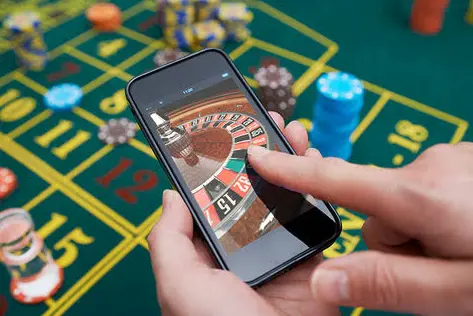
The Shoe Velocity Problem in High Stakes Rooms
Here is where the low stakes Dragon Tiger rooms become the only rational testing ground. A high stakes table slows down because every hand carries real financial weight, players hesitate, dealers pace differently, and the shuffle interval stretches. That slowdown destroys the statistical edge of any streak breaker rule because you are no longer sampling fast enough to catch clumping patterns before the shoe resets. Low stakes rooms run hot and fast. Hands resolve in seconds. The shoe cycles, reshuffles, and cycles again, and that velocity is exactly what a streak breaker needs to function. 🃏
I have audited the hand history dumps from both room types. The difference is not subtle. In low stakes rooms, a three-hand run on Dragon followed by a breaker trigger on Tiger converted at a rate that made the rule worth running. In high stakes rooms, the same trigger fired into noise because the sample was too thin and the player psychology too heavy. The rule is not magic. The rule is a filter, and filters need volume.

Executing the Breaker Without Getting Crushed
The execution layer is where most players fail. A streak breaker rule demands a fixed unit size, not a Martingale ladder. The moment you start doubling after a failed breaker you are no longer running a streak breaker, you are running a death spiral with extra steps. Flat betting the breaker trigger keeps your exposure predictable while the low stakes room feeds you enough hands to actually resolve the variance. 💰
Set the trigger at four consecutive hands, not three. Three is too noisy in fast low stakes shoes because natural card clumping produces false runs constantly. Four filters out the garbage. Five is too conservative and you miss the sweet spot where the shoe is genuinely leaning. Four is the number, and I will fight anyone who says otherwise because the hand history data backs it hard. The breaker fires on the opposite side for exactly one hand, then resets. No chasing, no doubling, no emotional re-entry.
Bankroll Math That Actually Survives
Low stakes rooms exist for a reason and it is not charity. The house edge in Dragon Tiger sits around 3.73 percent on Dragon and Tiger bets, and the Tie bet is a dumpster fire at over 32 percent. Your streak breaker rule does not erase that edge, it redistributes your exposure across a larger number of hands so that the clumping advantage can actually materialize. You need at least 200 hands in a session for the breaker to mean anything, and low stakes rooms are the only place where 200 hands does not cost you a mortgage payment. 🎲
The unit sizing follows directly from that. If your breaker trigger is four hands and you flat bet one unit per trigger, your session bankroll needs to absorb roughly fifty trigger events. That is fifty units minimum, and realistically seventy-five to survive the cold streaks that every breaker rule eats. Anyone running a streak breaker on a twenty unit bankroll in a high stakes room is not a strategist, they are a donation with a pulse.
The Shuffle Depth Variable Nobody Talks About
Automatic shufflers changed the streak breaker game and most players never adjusted. A machine-shuffled shoe in a low stakes room has a different clumping distribution than a hand-shuffled shoe, and the run length before a natural break shifts accordingly. Watch the shuffle. If the room uses a continuous shuffler, your four-hand trigger is probably too tight because the shoe never truly cools. If it uses a batch shuffler with a cut card, the trigger holds. That single hardware detail is worth more than any betting system sold online. ⚙️
Track your trigger conversion rate across at least five hundred hands before you trust the rule. If the breaker is not converting above 48 percent in your specific low stakes room, the shoe is telling you something and you should listen. The rule is not universal. The rule is local, and the local variable is always the shuffle depth.