Pai Gow Tile Wong: How Does It Rank?
The Wong rank in Pai Gow poker is a deceptively mediocre hand that fools casual players into overvaluing it, and that miscalculation bleeds money at a rate most tilt-driven gamblers never even notice. Strip away the marketing gloss and you're looking at a seven-card hybrid that sits squarely in the middle of the hand-strength hierarchy—strong enough to beat junk, weak enough to get crushed by anything a real grinder respects.
The Structural Anatomy of a Wong Hand
A Wong is nothing more than a five-card straight paired with a pair of aces as the two-card hand, or more precisely the configuration where your seven cards split into a straight and a pair of aces. Sounds respectable until you run the combinatorics. The Pai Gow Tile Wong occupies a narrow band above the lowly straight-plus-high-card split but below every two-pair-and-better arrangement that serious players actually chase. The house edge doesn't care about your feelings. It cares about the probability mass, and that mass is thin.
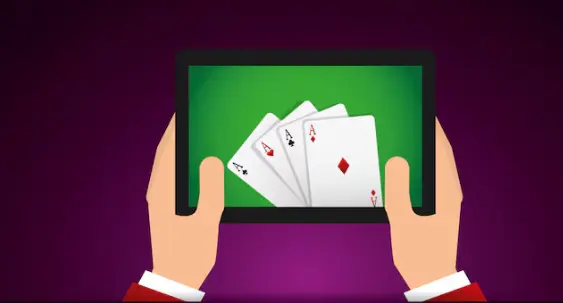
When you set a Wong correctly, you're forced into a defensive posture: the straight goes to the five-card back, the aces anchor the front. The problem is the front hand's fragility. Any dealer pair above aces, or a front-hand ace-high with a kicker that outranks yours, flips the entire wager. That's the silent killer most recreational players never model.
Where the Wong Actually Ranks in the Pecking Order
Rank it honestly: Wong sits roughly in the 40th to 55th percentile of all seven-card Pai Gow hands depending on the split logic you apply. That's a brutal reality check. It beats garbage and loses to everything a competent dealer presents with confidence. The Pai Gow Tile Wong is a trap hand precisely because it feels stronger than it is—players see the straight and the aces and mentally upgrade it two tiers.
Compare it against the hierarchy that matters: five aces, royal flush, straight flush, four of a kind, full house, flush, three of a kind, straight, and then the split configurations. A Wong lives down in the split-configuration basement alongside the lowly "pair of aces plus straight" cousin hands. It's the hand equivalent of a participation trophy. 🎲
The House Edge Math Nobody Wants to Hear
Run the numbers cold. The probability of being dealt a Wong configuration is dwarfed by the frequency of dealer hands that simply outrank your split. Every time you set a Wong, you're conceding the front hand's vulnerability in exchange for a back hand that only wins when the dealer's five-card side bricks. The Pai Gow Tile Wong ranking isn't a matter of pride—it's a matter of expected value, and the EV on this configuration is negative against any dealer who knows how to set a hand.
Smart players treat a Wong as a fold-equivalent signal in their mental model. You don't celebrate it. You acknowledge it, set it optimally, and brace for the coin-flip outcome. The tile-based variants of Pai Gow amplify this further because tile ranking introduces a secondary hierarchy that most Western players completely ignore—and that ignorance is exactly where the house extracts its margin. 💰
Setting Strategy That Respects the Ranking
Optimal Wong setting means sacrificing the illusion of a strong front hand. Push the pair of aces to the back where the five-card comparison gives you a fighting chance, and let the straight absorb the front-hand damage. It feels wrong. It looks weak. It is mathematically correct, and the gap between correct and comfortable is where the money lives. The ranking doesn't negotiate with your ego.
Track your Wong outcomes across sessions and the pattern emerges fast: win rate sits barely above breakeven on the back hand and well below fifty percent on the front. That asymmetry is the entire story of why this hand ranks where it does—respectable-looking, structurally compromised, and permanently overrated by the crowd that never bothered to count.